The transition from AI experimentation to professional creative production is often where marketing teams and video editors hit a wall. In the early stages of adopting generative tools, the novelty of a high-quality “one-off” image is enough to sustain interest. However, when the task shifts from generating a single hero image to delivering a comprehensive campaign—complete with social assets, out-of-home (OOH) displays, and video storyboards—the inherent randomness of most AI models becomes a liability. This is the “Continuity Crisis,” where the inability to replicate lighting, texture, and character fidelity across multiple assets halts the production pipeline.
For professional creators, the value of a tool is no longer measured by how “surprising” its output is, but by how predictable it can be made. Moving toward a pipeline-first mindset requires shifting focus from the prompt itself to the structural control and resolution-readiness of the output. This is where systems like Nano Banana Pro AI come into play, offering the granular control necessary to bridge the gap between a generative experiment and a high-stakes campaign delivery.
The Uncanny Valley of Creative Continuity
Base AI models are frequently trained to prioritize variety over continuity. For a casual user, seeing four distinct interpretations of a prompt is a feature; for a designer trying to maintain brand standards across twenty assets, it is a bug. The hidden cost of “generative slots”—where a team generates hundreds of images to find one usable asset—is a failed production model. It consumes human hours in curation and post-production that should be spent on strategic refinement.
The friction point for professional teams lies in the “visual DNA.” If a campaign requires a specific architectural style or a recurring protagonist, the subtle shifts in geometry or color temperature between generations create an uncanny valley effect. The audience might not be able to name why the assets feel disconnected, but the lack of cohesion erodes brand authority. Achieving professional-grade visuals requires a move away from stochastic guessing toward a system where the AI acts as a high-speed production assistant, capable of adhering to a pre-defined aesthetic signature.
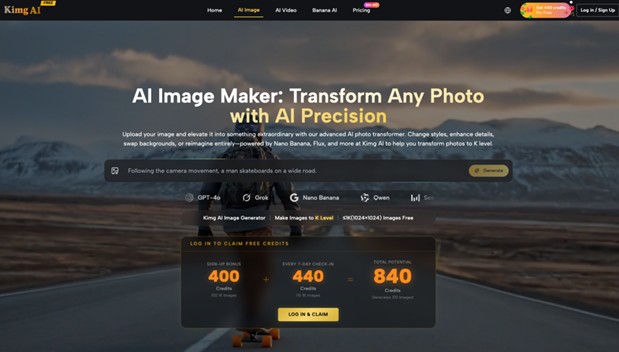 The K-Level Standard: Defining Usability for Large-Scale Media
Resolution remains one of the primary bottlenecks in generative workflows. While a 1024×1024 image may look impressive on a smartphone screen, it collapses under the scrutiny of high-density digital displays or large-format physical media. A standard 1K output lacks the pixel density for a billboard or even a full-width web banner on a Retina display without appearing soft or artifact-heavy.
In professional environments, “resolution-readiness” is a prerequisite for any asset entering the late-stage pipeline. Using the upscaling capabilities within Nano Banana Pro allows teams to ensure that visual fidelity remains intact at scale. It is not merely about increasing pixel count; it is about “re-interpreting” the details so that textures like skin, fabric, or brushed metal remain tactile and realistic at 4K and beyond. This technical standard reduces the need for extensive manual retouching in software like Photoshop, which is traditionally where designers spend the majority of their time correcting AI-generated “blur.”
However, it is important to note that upscaling is not a magic fix for poor initial compositions. If the underlying geometry is flawed or the lighting is inconsistent, increasing the resolution only serves to highlight those errors. Practical judgment dictates that the “K-level” standard should be applied only to assets that have already passed the “DNA check” for campaign continuity.
Architectural Fidelity: Managing Stylistic Drift in Multi-Asset Campaigns
Maintaining a stable aesthetic across a series of images requires more than just repeating the same prompt. Factors like lighting direction, focal length, and texture weights tend to drift as a session progresses. To manage this, creative teams are increasingly leveraging Nano Banana Pro AI to lock in specific visual parameters.
By operationalizing features like the “Fuse” function, designers can take the stylistic elements of one successful render and merge them with the structural layout of another. This allows for the diversification of content—changing the environment or the subject’s action—without losing the core aesthetic signature. When integrated with other high-fidelity models like Seedream or Flux, this approach creates a multi-layered workflow. Flux might be used for its superior prompt adherence in the initial layout, while the Nano Banana Pro AI environment provides the necessary “creative glue” to ensure the final textures and lighting match the rest of the campaign’s look-book.
The goal here is to minimize “stylistic drift.” In a high-speed production environment, every minute spent manually matching the color grade of two different AI outputs is a minute of lost throughput. A controlled system allows for a “set and forget” approach to the visual style, enabling the team to focus on narrative and placement.
Post-Generation Discipline: The Role of Inpainting and Outpainting
One of the most significant realizations for designers entering the AI space is that the “first render” is rarely the final render. In a professional workflow, the initial generation is merely a base layer. The real work happens through inpainting and outpainting—processes that allow for granular manipulation of the canvas.
Consider a scenario where a 1:1 square asset needs to be adapted for a 16:9 YouTube thumbnail and a 9:16 Instagram Story. Traditional cropping often ruins the composition or cuts off vital brand elements. Outpainting solves this by extending the environment beyond the original borders, maintaining the perspective and lighting of the source. This is where AI moves from being a “creator” to a “production assistant.”
Similarly, inpainting is essential for correcting the minor deviations that are inevitable in generative work—a misplaced shadow, an extra button on a garment, or a distracting background element. Rather than regenerating the entire image and risking the loss of a perfect facial expression or lighting setup, targeted inpainting allows the designer to fix only what is broken. This level of editability is what makes Banana AI a viable tool for professional teams who cannot afford the “hit or miss” nature of raw generation.
 The Limits of Autonomy: Where Generative Systems Fail the Campaign
Despite the rapid advancement of these tools, there are clear boundaries where human oversight remains non-negotiable. It is vital to manage expectations regarding what AI can actually handle autonomously within a commercial context.
One persistent difficulty is the rendering of complex, multi-layered text. While models are improving at short, single-word renders, complex typography within a stylistic composition often results in legibility issues or “hallucinated” characters. For any campaign involving significant copy, manual typography remains the gold standard. Relying on AI to “get the spelling right” in a hero asset is a risk most creative directors are not willing to take.
There is also the uncertainty of long-term stylistic drift when daisy-chaining multiple AI-led edits. Every time an image is outpainted, inpainted, and then upscaled, there is a cumulative risk of introducing “generational artifacts”—tiny errors that compound with each step. Furthermore, current models lack an inherent understanding of “brand safety” or cultural nuance. They operate on patterns, not ethics or strategic intent. Consequently, the “human-in-the-loop” isn’t just a safety net; it is a structural necessity for maintaining the integrity of the creative output.
Integrating AI into the Creative P&L
From a business perspective, the adoption of tools like Nano Banana Pro and Nano Banana Pro AI is an exercise in optimizing the creative Profit and Loss (P&L) statement. The ROI of these systems isn’t found in replacing designers, but in reducing the “prompt-cycling” time that currently eats into production budgets. By providing a system built for consistency and high-resolution output, the time from concept to “pixel-perfect” delivery is significantly compressed.
Moving toward a “Hybrid Creative Workflow” allows teams to delegate the heavy lifting of asset variation and resolution enhancement to the AI, while humans handle the strategic polish and brand alignment. This shift from manual labor to creative orchestration is the future of the generative media market. It isn’t about the quantity of images a team can produce, but the quality and consistency of the assets that actually make it to market.
Control, not just creation, is the ultimate goal. For the video editors and designers on the front lines, the ability to manipulate, scale, and replicate visuals with surgical precision is what transforms AI from a curiosity into a professional-grade asset. As these tools continue to evolve, those who master the discipline of post-generation editing and resolution management will be the ones who successfully navigate the transition from experimental AI art to scalable, production-ready media.